

Key takeaways
- Discover the best wind chimes for porches, patios, and gardens, from tuned aluminum tubes to handcrafted capiz shells, with clear buying guidance.
The best wind chimes for most homes are medium-length aluminum tube chimes with a tuned, moderate-volume voice, rust-resistant hanging hardware, and an overall length of about 24 to 36 inches. Smaller wood or capiz shell chimes suit balconies and sheltered corners, while large bronze or deep-tone chimes are better for spacious yards where their longer sustain can carry. The five chimes in this guide cover that full range: a hymn-tuned memorial chime, a hand-tuned American-made classic, a deep-tone black aluminum chime, a large bronze statement chime, and a colorful handcrafted shell chime for gentle sound and bright garden color.
As an Amazon Associate, we earn from qualifying purchases.
Table of Contents
- How to Choose the Best Wind Chimes
- What Makes a Wind Chime Sound Good
- Tube Materials and Weather Resistance
- Choosing the Right Length for Your Space
- Hanging and Placement Tips
- The 5 Best Wind Chimes
- Woodstock Amazing Grace Chime, Medium, Silver
- Corinthian Bells by Wind River, 36 Inch, Copper Vein
- Astarin Wind Chimes Outdoor Large Deep Tone, 36 Inch, Black
- Woodstock Bells of Paradise, Large, Bronze
- Bellaa Rainbow Capiz Sea Glass Wind Chime, 27 Inch
- Wind Chimes Compared at a Glance
- Care and Maintenance Through the Seasons
- Frequently Asked Questions
- Conclusion
- Product and ASIN Reference
How to Choose the Best Wind Chimes
Choosing a wind chime starts with listening to what your space needs rather than what looks largest in a catalog photo. A chime is a musical instrument played by moving air, and every part of its design changes the music it makes. The length of the tubes sets the pitch, the diameter and wall thickness set the depth and sustain, the material sets the brightness or warmth of the tone, and the size of the wind catcher decides how much breeze it takes to start playing. When those parts work together, a chime produces a calm, unhurried melody that drifts through a garden without demanding attention. When they do not, the same breeze produces a thin rattle or a clang that wears out its welcome in a single afternoon.
Start by standing where you plan to hang the chime and noticing the wind. A sheltered porch with a roof and walls nearby moves less air than an open garden corner, and a chime that needs a strong gust to sound will stay silent on a sheltered porch. A large wind catcher gathers more air and starts the chime in lighter breezes, while a small sail needs a firmer push. If your porch sits in a quiet neighborhood with houses close together, a smaller chime with a softer voice respects the neighbors and still fills your own seating area with sound. If your garden is large and open, a longer chime with heavier tubes can hold its own across the distance without sounding faint.
Think about when you will hear the chime most. A chime near a bedroom window plays through the night whenever the wind rises, so a gentle voice matters more there than a bold one. A chime near a dining patio plays during meals and conversation, so a clear tone that sits underneath voices works better than a loud one that competes with them. A chime beside a garden path greets visitors as they pass, so a bright, welcoming tone suits that spot. A memorial chime in a quiet corner of the garden serves a different purpose again: it marks a place of remembrance, and a slow, hymn-like melody carries meaning that a generic pentatonic chime cannot.
The number of tubes shapes the melody more than most buyers expect. Six tubes are the classic arrangement for a tuned chime, and the five chimes in this guide all use six tubes or a shell arrangement built around the same idea. Six tubes tuned to a pentatonic scale can only play notes that harmonize with each other, so no combination of wind and chance produces a sour chord. That is why pentatonic tuning dominates the best wind chimes: the breeze is a random player, and a pentatonic scale forgives randomness. Chimes tuned to a specific melody, such as the opening notes of a hymn, go a step further and give the random breeze a recognizable tune to return to again and again.
What Makes a Wind Chime Sound Good
A good wind chime sound has three qualities: clarity, sustain, and balance. Clarity means each tube rings with a pure note rather than a dull thud or a metallic buzz. Sustain means the note lingers after the striker moves away instead of dying at once. Balance means no single tube dominates the others, so the melody stays even as the wind shifts. Makers achieve these qualities by tuning each tube before assembly, testing pitch and clarity, and matching tubes into sets that harmonize.
Tuning is the single most important difference between a chime that sounds musical and one that sounds random. Precision tuning cuts each tube to an exact length for its intended note, and the best makers test every tube by ear or with instruments before it leaves the workshop. Hand tuning goes a step further: a craftsperson listens to each tube, adjusts it, and checks it against the others in the set. This is slow work, and it is why hand-tuned chimes from established makers cost more than mass-produced chimes that are cut to length without individual testing. The difference is audible within seconds of hanging the two side by side.
Tube diameter and wall thickness shape the voice as much as length does. A wide tube with thick walls produces a deeper, rounder tone with long sustain, while a narrow tube with thin walls produces a brighter, lighter tone that fades faster. The Astarin chime in this guide uses tubes more than an inch in diameter to reach a deep bass voice at a moderate overall length, while the Woodstock Amazing Grace chime uses slimmer silver tubes for a clear, bright hymn melody. Neither voice is better in the abstract; the right choice depends on the size of your space and the mood you want the chime to set.
The striker and clapper matter more than their modest appearance suggests. A dense hardwood striker transfers energy cleanly to the tubes and produces a clear attack, while a soft or lightweight striker produces a muted tap. The clapper hangs below the tubes and catches the wind through the sail, so its weight and shape decide how the chime responds to gusts. A well-matched clapper moves freely, strikes the tubes squarely, and returns to center without tangling the suspension cords. Cheap chimes often fail here first: a clapper that is too light barely moves the tubes, and one that is too heavy slams them.
The wind catcher, or sail, is the engine of the whole instrument. It hangs below the clapper and catches the breeze, translating moving air into motion. A large sail starts the chime in light air and keeps it playing in variable wind, while a small sail needs a steadier breeze. Sails come in many shapes, from simple discs to leaves, feathers, and engraved plates, and their shape changes both the look and the sensitivity of the chime. A sail that is too large for its chime can overdrive the tubes in strong wind, so the best designs match sail area to tube weight and clapper size.
Tube Materials and Weather Resistance
Aluminum is the most common tube material in quality wind chimes, and for good reason. It does not rust, it holds a tune well, it is light enough to hang easily, and it can be anodized or powder-coated in a wide range of colors. Anodizing bonds color into the surface of the metal, so it resists fading and chipping better than paint. Powder coating adds a tough, weather-resistant skin that stands up to rain, sun, and temperature swings. The Corinthian Bells chime in this guide uses powder-coated aluminum tubes, while the Astarin chime uses anodized and powder-coated aluminum for the same reason: the finish protects the metal and keeps the color true through seasons outdoors.
Bronze-toned aluminum gives the look of bronze without the weight and upkeep of solid bronze. The Woodstock Bells of Paradise chime uses bronze-finished aluminum tubes that catch warm light and suit traditional gardens, while the Amazing Grace chime uses polished silver aluminum for a bright, classic appearance. Real bronze and brass chimes exist and produce a rich, bell-like tone, but they weigh more, cost more, and need occasional cleaning to keep their finish. For most porches and gardens, bronze-finished aluminum delivers the look and much of the warmth with far less maintenance.
Wood plays a supporting role in most tuned chimes. Ash wood is a favorite for tops, strikers, and wind catchers because it is strong, stable, and attractive, and a teak or cherry finish protects it against moisture. Bamboo appears in lighter chimes and in decorative accents, and it brings a warm, natural look that suits Asian-inspired gardens. Wooden parts need a weather-resistant finish and occasional inspection, since unfinished wood absorbs water, swells, and can crack as it dries. Quality makers seal their wood thoroughly, and a chime that is brought under cover during the harshest winter storms will keep its wood in good condition for many years.
Capiz shells offer a completely different sound and look. These thin, translucent shells come from a small marine mollusk, and when they are strung together they produce a soft, gentle tinkling rather than a bold metallic ring. The Bellaa chime in this guide uses rainbow capiz shells in a wooden frame, and sunlight passing through the shells creates shifting color on nearby surfaces. Shell chimes are quieter than aluminum tube chimes, which makes them ideal for balconies, small patios, and indoor spaces where a loud chime would overwhelm the room. They are also lighter, so they hang easily from a simple hook.
Nylon cord is the standard suspension material for quality chimes because it resists rot, mildew, and ultraviolet damage. Cotton cord looks natural but weakens outdoors and needs replacing sooner. Stainless steel hardware, including rings and hooks, resists rust and keeps the chime hanging safely. When you inspect a chime, look at the cord and hardware as carefully as the tubes: a beautiful chime with a fraying cord is a chime that will fall.
Choosing the Right Length for Your Space
Overall length is measured from the top of the hanging ring to the bottom of the wind catcher, and it is the most useful single number when matching a chime to a space. A 24-inch chime fits a small porch, a balcony, or a sheltered garden nook, and it produces a clear, mid-range voice that carries across a seating area without dominating it. A 27-inch chime adds a little more presence and depth while still fitting comfortably under a standard porch ceiling. A 36-inch chime is the versatile middle ground for most homes: it has enough tube length for a deep, resonant voice, yet it hangs comfortably from a porch beam with clearance below. A 44-inch chime is a statement piece for a large porch, a tall garden arbor, or an open yard, and it needs both headroom and open space around it to sound its best.
Ceiling height sets a hard limit. A porch with an eight-foot ceiling gives you about 96 inches from floor to beam, and a 44-inch chime hanging from that beam leaves roughly four feet of clearance below the sail, which is enough for most adults to walk under without ducking. A 36-inch chime leaves even more room and suits porches where people gather and move around. A balcony with a lower ceiling or a pergola with crossbeams needs a shorter chime, and a 24-inch or 27-inch model is the safer choice there. Always measure before you buy, and remember that the chime swings: allow at least a foot of clearance on every side so the tubes never strike a post, a wall, or a hanging plant.
Sound carries differently in different spaces. On an open patio, sound spreads and fades quickly, so a longer, deeper chime holds up better. In a walled courtyard or a porch with a solid roof, sound reflects and lingers, so a smaller chime can sound surprisingly full. If your seating area sits close to the chime, a gentle voice is enough; if the chime hangs at the far end of a large garden, a deeper voice with longer sustain will reach you. When in doubt, choose the middle size: a 36-inch chime is the most forgiving choice for the widest range of homes, and it is no accident that two of the five chimes in this guide measure 36 inches overall.
Hanging and Placement Tips
Hang your chime where the breeze reaches it but the weather does not punish it. The best spot is usually near the edge of a porch roof, under an arbor, or from a sturdy tree branch where air moves freely around the tubes. Avoid hanging a chime tight against a wall, because the wall blocks the breeze on one side and the tubes strike the surface when the wind shifts. Avoid hanging it directly above a walkway where heads and shoulders will brush the sail, and avoid hanging it where a door swings into it.
Use hardware rated for more than the chime weighs. A screw hook driven into a solid beam, a heavy-duty bracket, or a swivel hook that lets the chime turn with the wind all work well. A swivel hook has an extra advantage: it prevents the suspension cord from twisting and tangling in shifting wind, which keeps the chime sounding evenly. If you hang the chime from a tree, use a wide strap or a branch hook that does not cut into the bark, and check the branch for dead wood before trusting it with the load.
Give the chime a few days to settle into its spot before judging its sound. Wind patterns change with the time of day, and a chime that seems quiet at noon may sing in the evening breeze. If the chime sounds too loud, move it to a more sheltered spot or remove the wind catcher on windy days. If it sounds too quiet, move it toward the open edge of the porch or choose a larger sail. Small changes in placement make a large difference in how often and how loudly a chime plays.
Seasonal care is simple. In spring, wipe the tubes with a soft cloth and check the cord for fraying. In summer, the chime will play most, and a quick rinse removes dust and pollen that can dull the finish. In autumn, clear leaves from around the chime so they do not tangle in the cords. In winter, consider bringing a shell chime indoors or under cover, and check a metal chime after storms for ice buildup on the sail. A chime that is cared for in this light, regular way will sound good for many years.
The 5 Best Wind Chimes
The five chimes below were chosen to cover the main ways people use wind chimes at home: a memorial and gift chime with a recognizable melody, a hand-tuned American classic, a deep-tone chime for large porches, a large bronze statement chime, and a colorful shell chime for gentle sound. Each one is described from its published specifications, with its material, tuning, length, and intended use set out plainly so you can compare them on the qualities that matter. Budget, mid-range, and premium tiers are noted for each chime, and the tiers reflect build quality, tuning, and materials rather than any single feature.
Woodstock Amazing Grace Chime, Medium, Silver
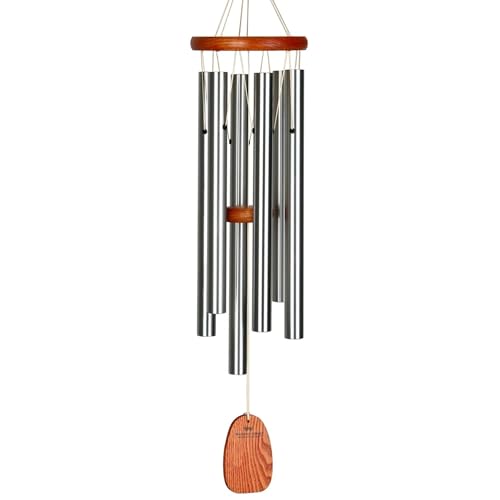
The Woodstock Amazing Grace Chime is the most recognizable chime in this guide, and its appeal is easy to understand. Its six silver aluminum tubes are precision tuned to play the opening notes of Amazing Grace, one of the most widely known hymns in the English-speaking world. When the breeze moves through the tubes, the melody is not abstract: listeners hear the shape of a tune they already know, and that familiarity gives the chime an emotional weight that a generic pentatonic chime cannot match. That is why this chime is so often chosen as a memorial gift, a sympathy gift, and a housewarming gift. It marks a moment, a person, or a new home with music that carries meaning beyond decoration.
At 24 inches overall, this is the smallest tuned metal chime in the guide, and its size is a deliberate strength. A 24-inch chime fits porches, balconies, and garden corners where a longer chime would crowd the space or hang too low. It suits a front porch where visitors pass close by, a small patio where seating sits near the hanging point, and a sheltered garden nook where the breeze is gentle. The silver aluminum tubes are polished to a bright finish that catches light without glare, and the ash wood top with a cherry finish adds warmth that keeps the chime from looking cold or industrial. The combination of silver metal and warm wood suits a wide range of home styles, from traditional to contemporary, and it looks at home beside both painted trim and natural stone.
The tuning deserves a closer look, because it is what separates this chime from lookalike chimes that borrow the same shape. Woodstock Chimes are designed by professional musicians, and the Amazing Grace chime is tuned so that the opening measures of the hymn emerge from the random movement of the wind. That sounds unlikely until you hear it: the pentatonic framework underneath the hymn means the breeze cannot produce a wrong note, and the hymn tuning guides the notes toward a familiar phrase. The result is a chime that sounds intentional rather than accidental, and listeners often pause to notice it in a way they do not pause for an untuned chime.
Build quality follows the same careful pattern. The ash wood top is weather-resistant, the six aluminum tubes will not rust when exposed to the elements, and the removable wind catcher lets you silence the chime or adjust its sensitivity without taking it down. Removing the sail is useful on stormy nights, in quiet neighborhoods, or when you want the porch to stay silent during a gathering. The chime weighs about one and a half pounds, so it hangs easily from a standard hook, and its modest weight makes it a good choice for a pergola beam or a sturdy bracket that would not suit a heavier chime.
This chime suits buyers who want a gift with meaning, a memorial piece, or a first tuned chime for a modest space. It is less suited to a large open yard, where its 24-inch length and slim tubes will sound faint across the distance. It is also a chime to choose with its purpose in mind: if you want background music without a recognizable melody, a pentatonic chime such as the Corinthian Bells model below may fit better. But if you want a chime that says something every time the wind moves, the Amazing Grace chime earns its place at the top of this guide.
Specs
- Material: Silver aluminum tubes with ash wood top
- Number of tubes: 6
- Overall length: 24 inches
- Dimensions: 24 x 5 x 5 inches
- Weight: 1.4 pounds
- Tuning: Opening notes of Amazing Grace
- Wind catcher: Removable
- Weather resistance: Rust-resistant aluminum, weather-resistant wood finish
- Tier: Premium
Corinthian Bells by Wind River, 36 Inch, Copper Vein

Corinthian Bells by Wind River are the classic American hand-tuned chime, made in Virginia with materials sourced from suppliers in the United States, and the 36-inch Copper Vein model is the sweet spot of the line. It is long enough to produce a deep, full voice with real sustain, yet compact enough to hang from a standard porch beam with comfortable clearance below. The copper vein finish is a warm, mottled bronze-copper tone that suits brick, stone, timber, and painted trim alike, and it reads as traditional without looking old-fashioned. This is the chime to choose when you want a proven, hand-tuned instrument that will anchor a porch or garden for years.
Hand tuning is the heart of this chime. Each of its six aluminum tubes is tested for clarity and pitch before assembly, and the set is tuned to a C pentatonic scale that produces a full chord from root to octave. The pentatonic scale is the reason Corinthian Bells sound harmonious in any wind: every combination of notes the breeze can strike belongs to the same chord. The 36-inch size uses a one-inch tube diameter and a longest tube of eighteen and a half inches, dimensions that give the chime a deeper voice than the 27-inch model while keeping it manageable in weight and size. Larger Corinthian Bells models go deeper still, but they need taller hanging points and more open space, and for most homes the 36-inch model is the best balance of depth and practicality.
The construction is built for year-round outdoor use. The tubes are powder-coated aluminum, so they resist rust and hold their color through rain and sun. The suspension uses UV-treated nylon cord, which resists rot and sun damage far better than natural fiber cord. The chime arrives in a presentation box, which matters for a gift and also speaks to how the maker thinks about the product: this is an instrument to be presented, not a commodity to be tossed in a carton. A five-year warranty backs the build, a longer term than most chimes in this class carry, and it reflects the confidence of a maker that has built this line for many years.
The Copper Vein color deserves mention because it changes how the chime looks in different light. In direct sun it glows warm and metallic, while in shade it reads as a deep bronze with subtle variation across the tubes. That variation is part of the finish, not a flaw, and it helps the chime blend with natural materials such as wood, stone, and copper garden accents. If your porch or garden leans toward cool tones, the same chime is available in other finishes, but Copper Vein is the most versatile choice for the widest range of homes, and it is the finish described here.
This chime suits buyers who want a hand-tuned, American-made chime with a deep voice and a classic look. It is less suited to a tiny balcony, where 36 inches of swinging chime may crowd the space, and it is a larger investment than the budget chimes in this guide. But for a main porch, a garden arbor, or a memorial corner where the chime will be heard daily, the Corinthian Bells 36-inch model is the benchmark against which the others are measured.
Specs
- Material: Powder-coated aluminum tubes
- Number of tubes: 6
- Overall length: 36 inches
- Longest tube: 18.5 inches
- Tube diameter: 1 inch
- Tuning: C pentatonic scale, hand-tuned
- Finish: Copper Vein
- Origin: Made in the USA
- Warranty: 5 years
- Tier: Premium
Astarin Wind Chimes Outdoor Large Deep Tone, 36 Inch, Black

The Astarin 36-inch deep tone chime is the value pick for buyers who want a deep, bass-rich voice without a premium build or a large footprint. Its six anodized aluminum tubes are hand-tuned for a deep tenor and bass sound, with a longest tube of sixteen point one inches and a tube diameter of about one inch. Those are unusually large tubes for a 36-inch chime, and the size is the point: wide, thick-walled tubes produce a lower, rounder tone with longer sustain than slim tubes of the same length. The result is a chime that sounds larger than it looks, and it fills a porch or patio with a calm, low melody that suits evening sitting and quiet conversation.
The black finish gives this chime a modern look that suits contemporary patios, dark trim, and minimalist gardens. Powder coating over anodized aluminum protects the tubes against weather, and the finish resists chipping and fading through seasons outdoors. The chime uses heavy-duty nylon cording and a high-density beech wood striker, a combination that produces a clear attack when the striker meets the tubes. A metal hook is included, so the chime can be hung as soon as it arrives, and the overall weight of under one kilogram keeps the hanging requirements modest: a standard porch hook or bracket is enough.
At 36 inches overall, this chime matches the Corinthian Bells model in length, which makes the comparison between them instructive. Both are 36-inch chimes, yet they sound different because their tubes differ. The Astarin uses wider tubes tuned for a deep, low voice, while the Corinthian Bells uses a C pentatonic tuning with a brighter, more chordal voice. Neither is better in every setting. The Astarin suits a buyer who wants depth and calm above all, especially in a large or open space where a low voice carries well. The Corinthian Bells suits a buyer who wants a classic chordal sound and a hand-tuned American-made instrument. The Astarin also costs less to buy, which makes it a strong choice for a first deep-tone chime or for a second chime in a garden that already has a brighter one.
The memorial and sympathy use of this chime is worth noting. The deep tone, the black finish, and the quiet dignity of the design make it a fitting memorial gift, and the listing presents it for that purpose alongside general garden use. A deep chime sounds unhurried, and that unhurried quality suits a place of remembrance. The same quality suits a meditation corner, a reading patio, or any spot where the goal is calm rather than cheer.
This chime suits buyers who want the deepest sound available at a moderate size and a mid-range tier. It is less suited to a small balcony, where 36 inches and a deep voice may overwhelm the space, and it is less suited to buyers who want a bright, hymn-like melody. But for a typical porch or a medium garden, where a deep, soothing voice is the goal, the Astarin 36-inch black chime delivers more low-end presence than any other chime of its length in this guide.
Specs
- Material: Anodized aluminum tubes, powder-coat finish
- Number of tubes: 6
- Overall length: 36 inches
- Longest tube: 16.1 inches
- Tube diameter: 1.1 inches
- Weight: 980 grams
- Tuning: Hand-tuned, deep tone
- Finish: Black
- Special feature: Waterproof
- Tier: Mid-range
Woodstock Bells of Paradise, Large, Bronze

The Woodstock Bells of Paradise in large bronze is the statement chime of this guide. At 44 inches overall, it is the longest chime here, and its six bronze aluminum tubes produce a deep, resonant voice with long sustain that carries across a large porch, a spacious garden, or an open yard. The bronze finish catches warm light and suits traditional gardens, timber arbors, and homes with copper or brass accents. A black aluminum ring and wind catcher frame the bronze tubes and give the chime a composed, finished look from every angle.
The Bells of Paradise line is tuned to a pentatonic scale, so the breeze can only play notes that harmonize, and the large tube length gives those notes a depth that smaller chimes cannot reach. Longer tubes vibrate more slowly, which is why they sound lower, and the 44-inch overall length allows tubes long enough to reach a genuinely deep register. That depth is the main reason to choose this chime: if you have a large space and you want a chime whose voice fills it, length is the simplest route to depth, and this chime uses its length well.
Scale matters in another way too. A 44-inch chime is a visual anchor as well as a musical one. Hung from a tall porch beam or a garden arbor, it draws the eye and marks the space as a place to linger. It needs headroom: measure your hanging point and allow clearance below the sail for people to pass, and allow room on every side for the chime to swing without striking a post or a wall. A chime of this size also needs a solid hanging point, since its weight and its swing carry more momentum than a 24-inch chime. A screw hook set into a sound beam or a heavy-duty bracket is the right choice, and a swivel hook helps the chime turn with shifting wind instead of twisting its cord.
The build follows Woodstock practice: aluminum tubes that will not rust, a weather-resistant finish, and a design refined over many years of making tuned chimes. The bronze aluminum tubes give the look of bronze without the weight and upkeep of solid bronze, and the black ring and wind catcher provide a visual counterpoint that keeps the bronze from looking flat. This is a chime that looks as considered as it sounds, and it suits a home where the garden is a designed space rather than an afterthought.
This chime suits buyers with a large porch, a tall arbor, or an open yard who want a deep, resonant voice and a strong visual presence. It is less suited to a small porch, a low balcony, or a space where headroom is tight, and it is a premium-tier choice that reflects its size and tuning. But when the space is right, no smaller chime in this guide can match its depth or its presence, and it is the chime most likely to become the feature that visitors remember about a garden.
Specs
- Material: Bronze aluminum tubes with black aluminum ring and wind catcher
- Number of tubes: 6
- Overall length: 44 inches
- Dimensions: 44 x 6 x 6 inches
- Tuning: Pentatonic scale
- Weather resistance: Rust-resistant aluminum
- Tier: Premium
Bellaa Rainbow Capiz Sea Glass Wind Chime, 27 Inch

The Bellaa Rainbow Capiz Sea Glass wind chime is the gentle outlier in this guide, and it earns its place by doing something none of the metal chimes can do. Instead of aluminum tubes, it uses translucent capiz shells in rainbow colors, strung in a wooden frame, and the sound it makes is a soft, light tinkling rather than a bold metallic ring. Sunlight passing through the shells creates shifting color on nearby surfaces, so the chime is as much a visual piece as a musical one. It suits balconies, small patios, sheltered garden corners, and indoor spaces where a loud chime would overwhelm the room.
At 27 inches overall, this chime fits spaces that are too small for a 36-inch or 44-inch metal chime. It hangs easily from a simple hook, it weighs little, and its soft voice carries across a seating area without reaching the neighbors. That makes it a good choice for apartments, townhouses, and dense neighborhoods where a metal chime might draw complaints. It is also a good choice for a bedroom window, a reading nook, or a covered porch where the goal is gentle background sound rather than a bold statement.
The handcrafted character of this chime is central to its appeal. Each piece is individually handmade using authentic rainbow capiz seashells, and the shells are selected for their natural iridescent beauty. No two shells are identical, so no two chimes look exactly alike, and that variation is part of what buyers value. The wooden frame is made from sustainable wood, and the chime is presented as a gift piece for many occasions, from housewarmings to sympathy gifts. The rainbow colors suit coastal decor, beach houses, and bright garden rooms, and the shell theme fits naturally beside plants, water features, and light-colored furniture.
Sound is the main trade-off to understand before buying. Capiz shells produce a delicate, high, shimmering sound that is lovely at close range and fades quickly with distance. In a large open garden, this chime will be hard to hear from more than a few steps away, and it will not compete with traffic or wind in trees. In a small, sheltered space, that same delicacy is a virtue: the chime plays softly, it never startles, and it suits quiet mornings and evenings. Buyers who want a deep, carrying tone should choose one of the metal chimes in this guide; buyers who want gentle color and soft sound will be happy with the Bellaa.
Care is simple but worth noting. Shell chimes do best in sheltered spots where they are protected from hard driving rain and high wind, which can tangle the strands and chip the shells. A covered porch, a balcony with a roof, or an indoor hanging spot near a window all suit it well. Wipe the shells gently with a soft cloth to remove dust, and bring the chime under cover during storms. Treated this way, the shells keep their color and their light, tinkling voice for years.
Specs
- Material: Rainbow capiz seashells with sustainable wood frame
- Number of pieces: 63 shell pieces
- Overall length: 27 inches
- Tuning: Gentle shell tones
- Use: Indoor and outdoor, best in sheltered spots
- Handcrafted: Individually handmade
- Tier: Budget
Wind Chimes Compared at a Glance
The five chimes in this guide differ most in length, voice, and intended space, and the right choice follows from those three differences. The Woodstock Amazing Grace chime is the shortest metal chime here at 24 inches, and it is the only one tuned to a recognizable hymn. Choose it for a small porch, a memorial gift, or a first tuned chime where meaning matters as much as music. The Corinthian Bells 36-inch chime is the classic hand-tuned choice, with a C pentatonic voice, a five-year warranty, and a copper vein finish that suits traditional homes. Choose it for a main porch or garden where a proven, deep-toned instrument will be heard daily. The Astarin 36-inch black chime matches the Corinthian Bells in length but voices its tubes lower, giving it the deepest sound of any 36-inch chime in this guide at a mid-range tier. Choose it when depth and calm matter most and a modern black finish suits the space. The Woodstock Bells of Paradise at 44 inches is the largest and deepest chime here, and it suits a large porch or open yard where its size and sustain can fill the space. Choose it when you have the headroom and the open ground to let it play. The Bellaa capiz shell chime at 27 inches is the quietest and most colorful choice, with a soft shell voice and rainbow color that suits balconies, small patios, and indoor spots. Choose it when gentle sound and bright decoration matter more than volume or depth.
Material is the second comparison to make. Three of the chimes use aluminum tubes with different finishes: silver, copper vein, and black. Aluminum does not rust, it holds a tune, and it keeps its color through seasons outdoors. The bronze-finish aluminum of the Bells of Paradise gives the look of bronze without the weight. The capiz shells of the Bellaa chime give a soft sound and a translucent glow that no metal chime can match, but they need a sheltered spot and they will not carry across a large garden. Wood appears in the tops, strikers, and frames of the metal chimes and in the frame of the shell chime, and in every case it is finished for weather resistance.
Care and Maintenance Through the Seasons
A wind chime asks little of its owner, and a small amount of regular care keeps it sounding good for many years. In spring, wipe the tubes or shells with a soft, dry cloth and check the suspension cord for fraying, especially where it passes through the top and the clapper. Replace a worn cord before it fails, and use nylon cord rated for outdoor use. Check the hook or bracket at the same time, and tighten or replace any hardware that has loosened over winter.
In summer, the chime will play most often, and dust and pollen can settle on the tubes and dull the finish. A gentle rinse with clean water followed by air drying is enough for aluminum tubes, and a soft cloth restores the shine. For capiz shells, use a dry cloth only, since water spots can mark the surface. Keep plants trimmed back from the chime so leaves and stems do not tangle in the cords or strike the tubes.
In autumn, clear fallen leaves from around the chime and check that the wind catcher moves freely. Leaves caught in the cords can mute the chime or pull it off balance. If your area gets strong autumn storms, consider removing the wind catcher during the worst weather so the chime does not swing violently against nearby surfaces.
In winter, a metal chime can stay outdoors in most climates, but it deserves a check after ice storms and heavy snow. Ice on the sail adds weight and can stop the chime from moving, so clear it gently rather than pulling at frozen cords. A shell chime is better brought indoors or under a covered porch for the coldest months, since freezing rain can chip shells and stiffen the strands. Whatever the season, the rule is simple: a chime that is inspected twice a year and cleaned when it looks dusty will outlast one that is hung and forgotten.
Frequently Asked Questions
What length of wind chime is best for a porch?
A 24-inch to 36-inch chime suits most porches. A 24-inch chime fits small or sheltered porches, a 27-inch chime adds presence without crowding, and a 36-inch chime is the versatile middle ground for a standard porch with room to hang freely. Measure your ceiling height and allow clearance below the sail before choosing.
Do aluminum wind chimes rust outdoors?
Aluminum tubes do not rust, which is why aluminum is the most common material for quality outdoor chimes. Powder-coated and anodized finishes add further protection against rain and sun. Wooden parts and steel hardware need more attention, so check cords, hooks, and wood finishes at least twice a year.
What is the difference between pentatonic tuning and a hymn-tuned chime?
A pentatonic-tuned chime uses a five-note scale in which every combination of notes harmonizes, so the breeze cannot produce a sour chord. A hymn-tuned chime, such as the Amazing Grace model in this guide, goes further and tunes the tubes to the opening notes of a specific melody, so listeners hear a recognizable tune in the wind.
Can wind chimes be hung indoors?
Yes, wind chimes can be hung indoors near a window, a doorway, or a vent where moving air reaches them. Shell chimes and small metal chimes work best indoors because their gentle voices suit enclosed rooms. A large metal chime indoors may sound loud in a small room, so choose a smaller model or hang it where air movement is light.
Conclusion
The best wind chime for your home is the one whose voice, size, and look match the space where it will hang and the mood you want it to set. A 24-inch hymn-tuned chime brings meaning to a small porch or a memorial corner. A 36-inch hand-tuned chime brings a deep, classic voice to a main porch or garden. A 36-inch deep-tone chime brings calm and bass to a modern patio. A 44-inch bronze chime brings depth and presence to a large yard. A 27-inch shell chime brings color and gentle sound to a balcony or a sheltered room. Measure your hanging point, notice your wind, and choose the chime whose tuning and length fit that spot. Hung with care and checked twice a year, any of the five chimes in this guide will fill your porch or garden with music for many seasons.
Product and ASIN Reference
| Product | ASIN |
|---|---|
| Woodstock Amazing Grace Chime, Medium, Silver | B00026W5UK |
| Corinthian Bells by Wind River, 36 Inch, Copper Vein | B002MTH352 |
| Astarin Wind Chimes Outdoor Large Deep Tone, 36 Inch, Black | B07HNWVN76 |
| Woodstock Bells of Paradise, Large, Bronze | B008ES4DJY |
| Bellaa Rainbow Capiz Sea Glass Wind Chime, 27 Inch | B0141QO1Q2 |
More from Amazon
Programs that pair well with the guide above. Offers and eligibility are set by Amazon and may change.
Free shipping on eligible items, Prime Video and more. Eligible new members can start with a free trial.
Start a Prime free trialAudiobooks and podcasts to listen to on the go. Eligible new members can start with a free trial.
Try Audible freeAd-free music streaming. Eligible new subscribers can start with a free trial.
Try Music Unlimited freeA free business account with business pricing and bulk-buying tools for work, shop or home office.
Create a business accountAs an Amazon Associate we earn from qualifying purchases.







Write Your Review
No reviews yet. Be the first to share your experience!