

Key takeaways
- Four floor standing jointers whose listings state cast iron beds, compared by bed length, cutterhead type, motor and fence for home and pro shops.
Choosing a floor standing jointer is really a decision about the bed, not the badge on the cabinet. A long, flat cast iron bed is what keeps a bowed board supported before and after the cut, and that support is what turns rough lumber into a straight, glue-ready edge. Shorter or lighter tables can leave the ends of a long board unsupported, so the cut follows the warp instead of removing it.
This guide is for garage-shop woodworkers stepping up from a benchtop machine, furniture makers who joint long stock every week, and small pro shops that need an eight-inch option. Every pick below is a floor-standing model on its own stand or cabinet, and every listing states a cast iron bed or cast iron tables. Selections and specifications come from the product names and details on the Amazon listings.
Quick Picks
As an Amazon Associate we earn from qualifying purchases
| Product | Best for | Key spec from title |
|---|---|---|
| Powermatic 6-Inch Jointer, Helical Cutterhead (Model 54HH) | Long boards on a six-inch machine | Helical Cutterhead, 1 HP, 115/230V |
| JET 6-Inch Long Bed Jointer, Helical Cutterhead (JJ-6HHDX) | Quieter helical cutting in a home shop | Helical Cutterhead, 1 HP, 115/230V |
| JET 6-Inch Long Bed Jointer, Straight Knife Cutterhead (JJ-6CSDX) | Straight-knife simplicity and rabbeting | Straight Knife Cutterhead, 1 HP, 115/230V |
| Shop Fox W1858 8 x 72 Dovetail Jointer with Helical Cutterhead & Mobile Base | Wide stock and moving the machine around | 8 x 72, Helical Cutterhead, Mobile Base |
How to Choose
Bed length and what cast iron actually buys you
Bed length decides how much of a board stays supported while it crosses the cutterhead, and support is what produces a straight edge. A forty-six-inch bed can handle short furniture parts, but a sixty-six or seventy-two-inch bed keeps long rails and table legs registered against a flat surface for the whole pass. Cast iron matters because the listing-stated tables are precision ground and heavy, so they stay flat and resist the small movements that show up as snipe or a hollow in the middle of an edge. When you compare listings, read the total table length first, then check whether the infeed and outfeed sides are both cast iron rather than only the fence or the base.
Six-inch or eight-inch cutting width
Width decides which boards you can face joint in one pass. A six-inch machine covers most furniture stock, drawer parts and door rails, and it takes less floor space and usually runs on a dual-voltage motor. An eight-inch model such as the Shop Fox W1858 below lets you flatten wider panels and rough boards without ripping them down first, which saves time and keeps grain matched across a glue-up. The trade-off is weight, a larger footprint and, on the eight-inch pick here, a 230-volt motor. Measure the boards you actually buy before paying for width you may rarely use, and confirm the listing states the cutting width in its title or specifications.
Helical inserts or straight knives
A helical or spiral cutterhead cuts with many small four-sided carbide inserts, so a dull or nicked edge is fixed by rotating or swapping one insert instead of resetting a full knife set. The Powermatic 54HH lists forty inserts, the Shop Fox W1858 lists thirty-six, and the JET JJ-6HHDX lists twenty-seven in its listing details. Straight knives, like the three quick-set knives on the JET JJ-6CSDX, cost less to replace as a set and suit owners who already own a knife-setting routine. Inserts tend to leave a cleaner surface on figured grain, while knives reward careful setup. Either way, check the listing for insert or knife count and size before ordering spares.
Motor voltage, stand and dust collection
Electrical fit can rule a machine in or out before cutting quality ever matters. Two picks here run on 115/230-volt motors prewired for the lower voltage, which suits a garage circuit, while the eight-inch Shop Fox needs 230 volts and draws more current, so plan a dedicated circuit with an electrician if your shop lacks one. Look at the stand type as well: an enclosed cabinet adds stability and keeps the motor out of the dust stream, while a built-in mobile base helps in a shared garage. Finally, confirm the dust port size in the listing, because a jointer produces long shavings that overwhelm a small shop vacuum quickly.
The 4 Best Options
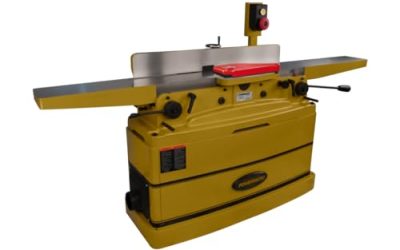
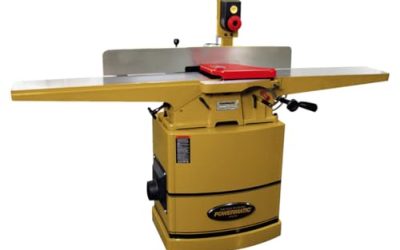
Powermatic 6-Inch Jointer, Helical Cutterhead, 1 HP, 115/230V (Model 54HH)

The 54HH suits a serious home shop that joints long boards often enough to feel the limits of a short bed. Its listing describes a sixty-six-inch precision-ground cast-iron table, which is unusually long for a six-inch machine and keeps longer stock supported through the whole pass. The true helical cutterhead uses forty four-sided carbide inserts, so maintaining a clean edge is a matter of rotating inserts rather than resetting knives. A thirty-eight-inch cast iron fence and a base cabinet that places the table thirty-two inches above the floor round out a machine aimed at repeatable furniture work.
Specs
- Model: 54HH (part number 1791317K)
- Motor: 1 HP, 1 phase, 115/230V, prewired for 115 volts
- Cutterhead: helical, 40 four-sided indexable carbide inserts
- Table: precision-ground cast iron, 66 inches long by 7-1/2 inches wide
- Fence: cast iron, 38 inches long, two-way tilting
- Table height from floor: 32 inches
- Included: stand, fence, guard, dust chute and two push blocks
Best for: Furniture makers who joint long six-inch stock and want the longest cast iron bed in this width class.
Watch out for: The listing notes this model is not intended for rabbeting, so choose the straight-knife JET below if rabbets are part of your work.
ASIN: B001AZV2OM
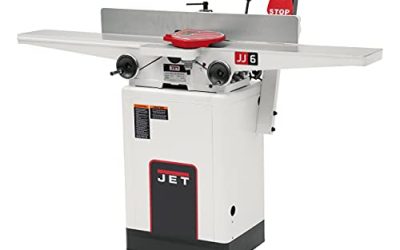
JET 6-Inch Long Bed Jointer, Helical Cutterhead, 1 HP, 115/230V 1Ph (JJ-6HHDX)

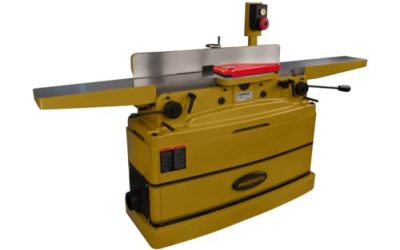
This JET fits a home shop that wants helical cutting without moving up to an eight-inch cabinet machine. The listing highlights extra-long heavy-duty cast iron infeed and outfeed tables, fifty-six inches in total, with a precision-machined finish for jointing longer boards without tipping. Its helical cutterhead carries twenty-seven four-sided indexable carbide inserts for a quieter cut, and the front-mounted table adjustment handwheels put depth corrections at the front of the machine. A heavy-duty one-piece steel closed stand with mounting tabs anchors the jointer, and the two-way tilting fence stops at forty-five and ninety degrees for bevel work.
Specs
- Model: JJ-6HHDX (part number 708466DXK)
- Motor: 1 HP, 115/230V, 1 phase
- Cutterhead: helical, 27 four-sided indexable carbide inserts
- Tables: cast iron infeed and outfeed, 56 inches total length, precision-machined finish
- Fence: two-way tilting, positive stops at 45 and 90 degrees
- Stand: one-piece steel closed stand with mounting tabs
- Included: stand, dust chute, two push blocks, hardware and tools
Best for: Home shops that want helical inserts and cast iron tables on a dual-voltage six-inch machine.
Watch out for: The fifty-six-inch bed is shorter than the Powermatic above, so very long stock needs extra outfeed support from a stand or roller.
ASIN: B0011TLVEI
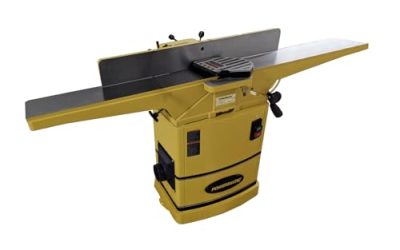
JET 6-Inch Long Bed Jointer, Straight Knife Cutterhead, 1 HP, 115/230V 1Ph (JJ-6CSDX)

The JJ-6CSDX is the straightforward pick for a buyer who prefers three quick-set knives over a head full of inserts. Its listing describes a long cast-iron table measuring fifty-five and three-quarter inches by seven and three-eighth inches, plus a built-in rabbeting ledge that the helical Powermatic above does not offer. The three high-speed steel quick-change knives are designed to swap without a knife-setting gauge, which shortens the one maintenance job straight-knife owners repeat most. Everything sits on an all-steel enclosed base cabinet that houses the motor and puts the table thirty-one and a quarter inches above the floor.
Specs
- Model: JJ-6CSDX (part number 708457DXK)
- Motor: 1 HP, 1 phase, 115/230V, prewired for 115 volts
- Cutterhead: straight knife, 3 high-speed steel quick-set knives, 6,000 RPM
- Table: cast iron, 55-3/4 by 7-3/8 inches
- Cutting capacity: 6-1/16 by 1/2 inches
- Rabbeting ledge: built in
- Table height from floor: 31-1/4 inches; weight 237 pounds
- Dust chute: built in with a 4-inch port
Best for: Woodworkers who want rabbeting capacity and simple knife changes on a cast iron bed.
Watch out for: Straight knives need periodic setting and sharpening as a full set, unlike the single-insert swaps on the helical models.
ASIN: B000BHNAJA
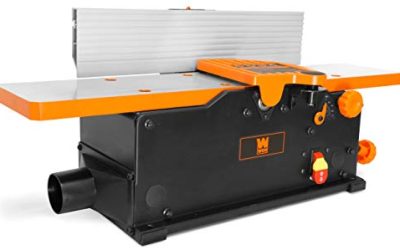
Shop Fox W1858 8 x 72 Dovetail Jointer with Helical Cutterhead & Mobile Base

The W1858 is the step up for shops that regularly flatten boards wider than six inches. Its listing describes a precision-ground cast-iron table with a total size of eight by seventy-two inches, adjusted by handwheels on dovetail ways, and a four-row helical cutterhead with thirty-six indexable carbide inserts. A three-horsepower, 230-volt motor gives it the capacity for sustained work in wide hardwood, while the sturdy cabinet stand includes a built-in mobile base, which matters when a machine this size shares a garage with a car. A pedestal-mounted switch and a rabbeting table add everyday convenience.
Specs
- Model: W1858
- Motor: 3 HP, 230V, single phase, 12A
- Cutterhead: helical, 4 rows, 36 indexable carbide inserts, 5,500 RPM
- Cutterhead diameter: 3-1/16 inches
- Table: precision-ground cast iron, 8 by 72 inches total, dovetail ways
- Maximum depth of cut: 1/8 inch; rabbeting capacity 1/2 inch
- Fence: 4-5/8 by 38 inches, positive stops
- Stand: cabinet stand with built-in mobile base; dust port 4 inches
Best for: Small pro shops and serious hobbyists who face-joint eight-inch boards and need to reposition the machine.
Watch out for: It needs a 230-volt supply and arrives heavy, so confirm your circuit and plan help for unloading and setup before ordering.
ASIN: B07YJ41N6F
Which One Fits Your Situation
You joint long furniture parts in a garage shop
Pick the Powermatic 54HH. Its sixty-six-inch cast-iron table is the longest six-inch bed in this group, so long rails and legs stay supported instead of dipping at the ends of the pass. The dual-voltage motor arrives prewired for a standard garage supply, and the forty-insert helical head keeps maintenance down to rotating individual inserts when one edge dulls or nicks.
You want helical cutting without a huge footprint
Choose the JET JJ-6HHDX. You still get cast iron infeed and outfeed tables and a helical head with twenty-seven carbide inserts, but the fifty-six-inch bed and closed steel stand take less room than the longer machines. Front-mounted handwheels make small depth corrections easy, which suits a shop where the jointer shares space with other tools and gets adjusted often.
You cut rabbets and prefer simple knife upkeep
Go with the JET JJ-6CSDX. It is the only pick here that pairs its cast iron table with a built-in rabbeting ledge, and its three quick-set knives are made to change without a setting gauge. If your projects include rabbeted frames or casework backs, that ledge saves a separate setup on another machine, and the enclosed cabinet keeps the motor cleaner.
You flatten wide boards and move machines around
Take the Shop Fox W1858. The eight-inch width and seventy-two-inch cast iron table handle wide, long stock that would need ripping down on a six-inch jointer, and the three-horsepower motor suits steady work in dense hardwood. The built-in mobile base in the cabinet stand lets one person roll it aside, which is rare at this size and weight.
Common Mistakes
- Buying by width alone and ignoring bed length, then wondering why long boards come off the machine with a hollow or bow still in the edge.
- Assuming every floor model has a cast iron bed; some listings only state a cast iron base or fence, so read the table material line before ordering.
- Plugging a 230-volt jointer into a shop circuit that cannot support it, instead of checking the motor voltage and current in the listing first.
- Taking deep passes to save time, which overloads the cutterhead and tears the surface; shallow passes with steady feed pressure give a flatter result.
- Forgetting delivery and setup: these machines arrive in heavy crates, and the tables need checking for coplanar alignment before the first real project.
Frequently Asked Questions
Is a cast iron bed really better than a steel or aluminium table?
Cast iron tables on these listings are precision ground, heavy and stable, which helps the bed stay flat and damps vibration during a pass. That stability supports straighter edges on long boards. Lighter tables can work for short stock, but for a floor-standing machine bought for accuracy, the ground cast iron surface is the feature worth paying for.
Can a six-inch jointer handle boards wider than six inches?
Not in a single face-jointing pass, because the cutterhead only covers its stated width. Owners sometimes joint a wide board in sections with a partial pass, but the clean solution for regular wide stock is an eight-inch machine like the Shop Fox W1858. Match the width to the boards you buy most often rather than to one unusual project.
What is the difference between a helical head and straight knives?
A helical head cuts with many small four-sided carbide inserts arranged in rows, so you rotate or replace one insert at a time and the cut tends to be quieter. Straight knives use a few long blades that are sharpened or replaced as a set. Both flatten wood well; the difference is maintenance style, noise and surface finish on difficult grain.
Do I need dust collection for a floor standing jointer?
Yes, plan on it. A jointer ejects a steady stream of long shavings, and the listings here include dust chutes or four-inch ports meant to connect to a collector. A small vacuum clogs quickly and leaves chips packed around the cutterhead, which affects the cut and cleanup. Size the collector to the port and empty it before it overfills.
More from Amazon
Programs that pair well with the guide above. Offers and eligibility are set by Amazon and may change.
Free shipping on eligible items, Prime Video and more. Eligible new members can start with a free trial.
Start a Prime free trialAudiobooks and podcasts to listen to on the go. Eligible new members can start with a free trial.
Try Audible freeAd-free music streaming. Eligible new subscribers can start with a free trial.
Try Music Unlimited freeA free business account with business pricing and bulk-buying tools for work, shop or home office.
Create a business accountAs an Amazon Associate we earn from qualifying purchases.

Write Your Review
No reviews yet. Be the first to share your experience!