

Key takeaways
- Three jointers that pair a helical or spiral carbide cutterhead with cast iron beds, from 6-inch and 8-inch floor models to an 8-inch benchtop.
A jointer purchase usually comes down to two checks that many listings blur together: what the cutterhead actually is, and what the beds are actually made of. Straight knives and cast aluminum tables are common at the lighter end of the market, while a true helical or spiral head loaded with indexable carbide inserts and ground cast iron beds is a different class of machine.
This guide is for woodworkers upgrading from a knife jointer, for small professional shops that flatten figured hardwood every week, and for bench-only workshops that still want iron tables. Every pick below earned its place because its own Amazon listing names an insert cutterhead and cast iron beds, with model details taken from those product pages.
Quick Picks
As an Amazon Associate we earn from qualifying purchases
| Product | Best for | Key spec from title |
|---|---|---|
| Powermatic 60HH 8-Inch Jointer | Wide boards and daily flattening work | Helical Cutterhead, 2 HP, 230V 1Ph |
| Powermatic 54HH 6-Inch Jointer | Smaller shops running household wiring | Helical Cutterhead, 1 HP, 115/230V 1Ph |
| Wahuda Tools 8-Inch Benchtop Jointer | Bench-only workshops that still want iron tables | Spiral Cutterhead, Cast Iron Tables |
How to Choose
Cutterhead design and insert count
A helical head wraps rows of small carbide inserts around the cutterhead in a staggered pattern, while a spiral head arranges similar inserts so each one meets the wood at a slight angle. Both designs shear the wood instead of chopping it the way a straight knife does, which is why they run quieter and leave less tear-out on figured grain. Insert count matters because it decides how much cutting edge works across the width: the Powermatic 60HH carries 54 four-sided inserts, the 54HH carries 40, and each insert can be rotated to a fresh edge when one side dulls or nicks.
Bed material and total bed length
Cast iron beds give a jointer its reference surface, so the listing should say cast iron outright rather than leaving the material vague. Iron holds a ground, machined finish, resists the dings that scar softer tables, and adds the mass that keeps a machine settled during a pass. Length matters just as much: longer beds support more of the board before and after the cutterhead, which is what keeps long stock flat instead of tipping into the cut. Compare the stated bed or table length against the longest boards you flatten, and treat pull-out extensions on benchtop models as support for occasional long pieces rather than a substitute for a full-length floor bed.
Width, motor and your wiring
Cutting width decides which boards you can face in one pass, and it splits this guide cleanly: 6-inch machines suit shops whose stock is mostly narrow boards and edging work, while 8-inch machines handle the wider panels and door parts that otherwise need ripping down first. Motor and voltage deserve the same honest check. The 60HH asks for a 230V single-phase circuit and returns 2 HP for deep passes in dense hardwood. The 54HH runs a 1 HP motor wired for 115 or 230 volts and arrives prewired at 115, so it can start work in a garage shop without an electrician visiting first.
Fence design and table adjustment
The fence is the part you touch on every edge-jointing pass, so look for positive stops at 90 degrees and at both 45-degree tilts, plus a tilting mechanism that moves smoothly and locks without drifting. Powermatic tilts the 60HH fence with a handwheel-driven worm gear and moves its infeed table with a lever that allows quick positioning followed by fine depth adjustment, a pairing that makes repeat setups faster. On any model, confirm how the infeed table travels: dovetailed ways and parallelogram linkages both aim to keep the table parallel to the outfeed side as depth changes, and the listing text usually names the system used.
The 3 Best Options
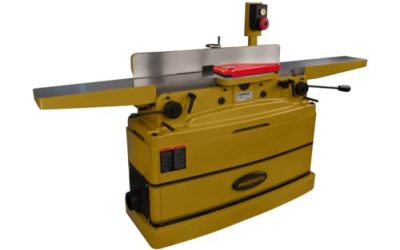
Powermatic 60HH 8-Inch Jointer

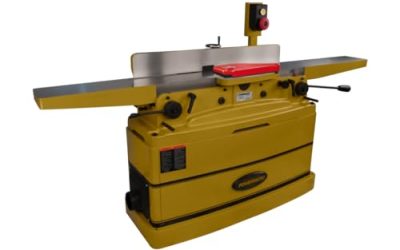
The 60HH is the machine in this guide for a shop that flattens wide, expensive hardwood often enough that finish quality off the jointer decides how much scraping and sanding follows. Its helical cutterhead carries 54 four-sided carbide inserts, so a nick becomes a quick insert rotation instead of a knife-setting session. The beds run 73 inches in total on dovetailed ways, giving long boards support on both sides of the head, and the 2 HP motor keeps the cut steady through deep passes in dense stock. A handwheel tilts the fence through a worm gear, and the switch sits high on an arm where it is easy to reach.
Specs
- Cutting width: 8 in
- Cutterhead: helical, 54 four-sided carbide inserts
- Motor: 2 HP, 230V, single phase
- Tables: cast iron, 73 in total length, mounted on dovetailed ways
- Fence: handwheel-operated worm gear tilting system
- Infeed adjustment: lever for quick positioning with fine depth adjustment
- Item weight: 489 lb
- Included: stand, switch arm, dust chute, two push blocks, cutterhead guard
Best for: Shops flattening wide hardwood boards and panels on a regular schedule.
Watch out for: It needs a 230V circuit and freight-style delivery planning; at 489 lb the top needs a hoist or several helpers to set onto the stand safely.
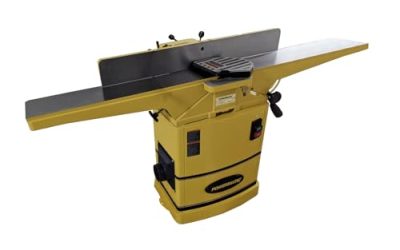
Powermatic 54HH 6-Inch Jointer

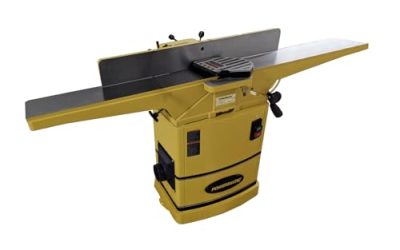
The 54HH brings the same insert-head design down to a 6-inch floor machine for shops that joint mostly furniture parts, drawer stock and edging. Its helical cutterhead holds 40 four-sided indexable carbide inserts, and the 66-inch tables are long for the width class, which helps when flattening longer boards. The 1 HP motor is wired for 115 or 230 volts and ships prewired at 115, so it can run from a standard shop outlet. An infeed adjustment lever handles quick depth changes with fine control, and the fence carries positive stops at 90 and 45 degrees in both directions.
Specs
- Cutting width: 6 in
- Cutterhead: helical, 40 four-sided indexable carbide inserts
- Motor: 1 HP, 115/230V, single phase, prewired 115V
- Table size: 66 x 7-1/4 in, cast iron per the listing material specification
- Fence: 38 in, positive stops at 90 and 45 degrees left and right
- Cutterhead speed: 6,000 RPM
- Dust port: 4 in
- Included: fence, guard, stand, dust chute, push blocks
Best for: Smaller shops that want a floor-standing helical jointer on household wiring.
Watch out for: The listing’s own weight figures conflict between mirrors, so confirm the shipping weight and delivery method on the product page before ordering; 6-inch width means wide boards still need ripping first.
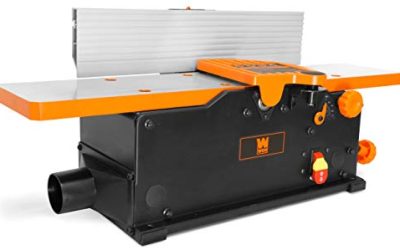
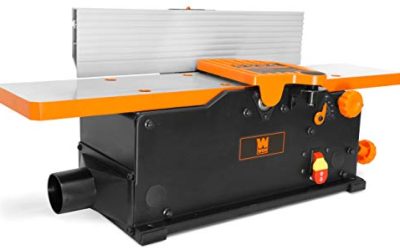
Wahuda Tools 8-Inch Benchtop Jointer
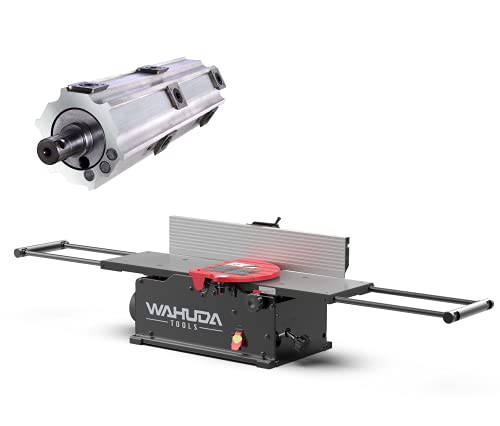
The Wahuda is the pick for a workshop with no floor space to give up, and it earns its place here because its listing states cast iron tables where most benchtop jointers use aluminum. The tables run 34 inches and pull out to 51 inches of support for longer boards, and the spiral cutterhead uses four-sided carbide inserts that rotate when an edge dulls. The 10-amp motor keeps it on regular household power, and the fence tilts from 90 to 135 degrees for bevel work.
Specs
- Cutting width: 8 in
- Cutterhead: spiral, four-sided carbide inserts
- Motor: 10 amp
- Tables: cast iron, 34 in extending to 51 in with pull-out extensions
- Fence: tilts from 90 to 135 degrees
- Material: steel and cast iron per the listing specification
Best for: Bench-only workshops that want cast iron tables and 8-inch width without a floor stand.
Watch out for: The listing’s part number field prints the number of a larger sibling model while the item model number reads 50180CC-WHD-Amazon, so confirm the model number on the page matches the 8-inch machine before ordering.
Which One Fits Your Situation
You flatten wide hardwood panels every week
Choose the Powermatic 60HH. Eight inches of width covers most panel and door stock in a single pass, the 73-inch beds keep long boards supported through the cut, and 54 carbide inserts spread the work so edges stay fresh longer between rotations. The 2 HP motor and 230V circuit suit a shop where the jointer runs daily rather than occasionally, and the worm-gear fence tilt makes repeat bevel setups calm and predictable.
Your shop runs on standard household outlets
Choose the Powermatic 54HH. It arrives prewired for 115 volts, so it can start flattening stock in a garage or basement shop without new wiring, and the motor can be rewired for 230 volts later if the shop gains a heavier circuit. Six inches of width covers most furniture parts, and the 66-inch tables support longer boards than the width class usually allows, which keeps this from feeling like a compromise machine.
You have bench space but no floor space
Choose the Wahuda 8-inch benchtop jointer. It delivers the full 8-inch width and cast iron tables in a machine that lives on a bench and can be moved aside when the surface is needed for assembly. The pull-out extensions stretch support to 51 inches for longer boards, and the spiral carbide head handles figured grain that would tear out under straight knives. It is the natural fit for a one-bench workshop producing smaller furniture and boxes.
Figured grain and tear-out drive your choice
Any of the three machines answers this problem, because all of them cut with staggered carbide inserts that shear fibers instead of lifting them. Pick by width and workspace instead: the 60HH for wide figured panels, the 54HH for narrower stock on household power, and the Wahuda when the machine must share a bench. When an insert edge dulls or nicks on any of them, rotating that single insert restores the cut without a full sharpening session.
Common Mistakes
- Buying a straight-knife jointer because the headline mentions a cutterhead upgrade, then discovering the inserts belong to a separate accessory head rather than the machine in the box.
- Comparing only cutting width and ignoring bed length, then fighting long boards that tip into the cutterhead because the tables cannot support them.
- Ordering a 230V floor jointer before checking the shop panel, leaving a delivered machine idle until an electrician can add the circuit.
- Assuming every benchtop jointer has aluminum tables, or the reverse; the listing states the material, and both kinds exist at bench size.
- Planning a solo setup for a floor jointer that weighs several hundred pounds, instead of arranging a hoist or helpers before the freight arrives.
Frequently Asked Questions
What is the difference between a helical head and a spiral head?
Both designs replace long knives with rows of small carbide inserts arranged around the cutterhead. A helical pattern staggers the inserts so they engage the wood in sequence, while a spiral pattern angles each insert for a shearing cut. In practice both run quieter than straight knives, reduce tear-out on figured grain, and let you rotate a single dull or nicked insert instead of resetting a full knife set.
Why do cast iron beds matter on a jointer?
The beds are the reference surface every board is judged against, so their flatness decides the accuracy of the whole machine. Cast iron can be ground to a precise, durable finish, shrugs off the small dings that scar softer tables, and adds mass that damps vibration during a pass. That is why listings in this class state the bed material plainly, and why confirming it matters before you buy.
Can I rotate or replace the carbide inserts myself?
Yes. Each insert is a small square of carbide held by a single screw, and it carries four cutting edges. When one edge dulls or nicks, you loosen the screw, turn the insert a quarter turn, and tighten it again for a fresh edge. A damaged insert can be swapped individually in minutes, with no knife-setting gauges and no need to remove the cutterhead from the machine.
Do these jointers need special electrical work?
It depends on the model. The Powermatic 60HH runs on 230V single phase, so most shops need a dedicated circuit added. The Powermatic 54HH is wired for 115 or 230 volts and arrives prewired at 115, and the Wahuda benchtop model runs its 10-amp motor on regular household power. Check the voltage line in the listing against your panel before ordering any floor machine.
…[truncated 3075 chars]
More from Amazon
Programs that pair well with the guide above. Offers and eligibility are set by Amazon and may change.
Free shipping on eligible items, Prime Video and more. Eligible new members can start with a free trial.
Start a Prime free trialAudiobooks and podcasts to listen to on the go. Eligible new members can start with a free trial.
Try Audible freeAd-free music streaming. Eligible new subscribers can start with a free trial.
Try Music Unlimited freeA free business account with business pricing and bulk-buying tools for work, shop or home office.
Create a business accountAs an Amazon Associate we earn from qualifying purchases.

Write Your Review
No reviews yet. Be the first to share your experience!