

Key takeaways
- The best anti-fatigue mats for kitchens and standing desks: a long runner, a firm desk mat, a beveled-edge pick, an extra-thick mat and a value two-pack.
Tile, hardwood and concrete are unforgiving places to stand. An hour of cooking, dishwashing or desk work on a hard floor leaves its mark in sore heels, aching knees and a tired lower back, and the discomfort builds quietly across a whole day of short tasks. A cushioned mat will not turn a kitchen into a lounge, but the right layer of foam or polyurethane underfoot spreads body weight, softens each step in place, and makes long stretches of standing noticeably easier to finish.
The five mats below are grouped by the job they do best rather than by brand. A long runner suits a galley kitchen where you move between sink and stove. A firm, flat mat belongs at a standing desk, especially under shoes. A beveled, sealed mat handles the wet zone in front of a sink, an extra-thick mat serves people who stand for hours, and a two-pack covers two work spots for less than two separate premium mats.
As an Amazon Associate, we earn from qualifying purchases.
Quick answer
For a long kitchen run, the DEXI runner covers the sink and stove in one piece. Desk workers who wear shoes do better on the firm, flat Imprint CumulusPRO, while the WellnessMats Bella suits wet sink zones. The HEALEG adds a full inch of cushion for long shifts, and the Gorilla Grip two-pack covers two spots on a budget.
DEXI Kitchen Floor Mat Runner (23 x 59 in)

The DEXI runner is the coverage pick: a single padded mat 59 inches long and 23 inches wide, wide enough to stand on with feet apart and long enough to run from the sink across the front of a stove. The memory-foam padding sits under a waterproof, stain-resistant surface with a vintage-style pattern, and a non-slip backing helps it stay put on tile and wood. For cooks who pace a counter line while prepping, one continuous cushioned strip beats two small mats with a cold gap of bare floor between them.
The trade-offs are the ones most foam runners share. The padding is modest next to the three-quarter-inch and one-inch mats further down this list, so marathon baking days still call for breaks. The patterned surface has shallow grooves that add grip, but flour and crumbs settle into them and need a brush rather than a quick sweep. The generous footprint can also crowd a narrow galley kitchen, so measure the walkway first: a runner that leaves only a sliver of floor on each side becomes an edge to catch a heel on.
Imprint CumulusPRO Professional Standing Desk Mat (20 x 30 in)

The CumulusPRO Professional is the desk pick, and its defining trait is a flat, firm profile. It is a one-piece polyurethane mat, 20 by 30 inches and three quarters of an inch thick, built around a dense cushion core that supports rather than swallows the foot. That firmness is exactly what office shoes need: soft, sinky foam feels pleasant barefoot but turns vague and tiring under a heeled shoe, while this surface stays stable for shifting weight, turning to a filing cabinet, or reaching across a desk. Beveled edges and a non-slip bottom round out a design aimed at workplaces, and the maker backs the line with floor-safety certification for its traction.
Polyurethane also shrugs off things that chew up cheaper foam: the surface resists punctures and scuffs from shoe heels, does not absorb spills, and wipes clean. The honest limits are size and feel. Twenty by thirty inches is a single stance zone, so restless standers who wander sideways will step off the edge, and anyone wanting a plush, sink-in kitchen feel will find this mat businesslike rather than cozy.
WellnessMats Bella Collection Anti-Fatigue Mat

The Bella is the wet-zone pick, built for the strip of floor in front of a kitchen sink where water lands daily. It is molded from solid polyurethane three quarters of an inch thick, with edges beveled at a shallow 20-degree angle so a foot rolls onto the mat instead of catching a raised lip. The top and bottom surfaces are both non-slip, the sealed surface is water resistant, and the floral relief pattern gives the mat a finished look that plain black foam does not. WellnessMats builds these in the USA and guarantees the mat will not curl at the edges, delaminate or compress flat, which are the three failure modes that kill most kitchen mats.
That construction suits a sink area because there is nothing to soak up water: a fabric-topped or open-foam mat in a splash zone stays damp and grows grubby, while this one sheds water and wipes dry. Two cautions apply. The relief pattern holds crumbs in its curves and wants a brush now and then, and solid polyurethane is heavy for its size, so the mat is less pleasant to haul out when cleaning beneath it. Buyers also pay for the long service life up front.
HEALEG 1-Inch Extra Thick Anti-Fatigue Floor Mat (20 x 30 in)

The HEALEG is the maximum-cushion pick, with a full inch of polyurethane foam underfoot in a 20 by 30 inch footprint. That extra depth over the common three-quarter-inch mats matters most to people who stand in one place for hours: home bakers through a long production day, laundry folders, hobbyists at a workbench, or anyone whose kitchen floor is concrete under a thin layer of tile. A wear-resistant, leather-look surface layer about the thickness of a credit card protects the foam, resists stains, and wipes clean with a damp cloth, so the mat works in a garage or utility room as happily as in a kitchen.
Depth has honest costs. A one-inch soft surface can feel unsteady to anyone with balance concerns, and the step up onto it is the tallest in this guide, so it is a poor choice for a walkway crossed in the dark. Thick foam also dents under point loads and recovers slowly, so stool legs leave temporary impressions, and a rolling chair will chew the surface rather than glide over it. Placed in a fixed standing spot, though, nothing else here cushions a long shift as deeply.
Gorilla Grip 2-Pack Cushioned Kitchen Mats (17 x 24 in and 17 x 48 in)
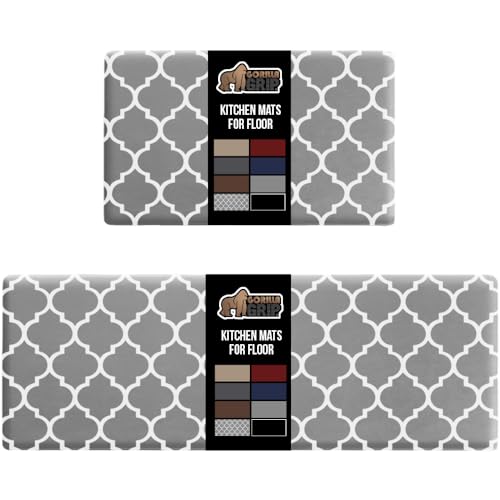
The Gorilla Grip two-pack is the value pick: two half-inch foam mats in one box, a 17 by 48 inch mat for the main work zone in front of a sink or counter and a matching 17 by 24 inch mat for the stove, a laundry tub or a second door. Both are waterproof and stain resistant with a textured top surface, so the pair gives a small kitchen a coordinated look and cushions the two places where people actually stand, instead of spending the whole budget on one long runner. The set also suits renters and first apartments, where covering the basics matters more than buying a mat for the decade.
Half-inch foam is the compromise that keeps the outlay low. It takes the edge off hard floors for everyday cooking and washing up, but it compresses sooner than the thicker mats above and offers less relief during genuinely long sessions. The brand’s own guidance for its foam mats is worth following: place them on a clean, dry floor, and wipe up water that gets underneath, because a light mat on a polished floor can creep. Treat the pair as replaceable workhorses rather than permanent fixtures and they earn their place.
How to choose
Set expectations first. A mat reduces the leg and back fatigue that comes from standing on hard floors, but it does not fix poor footwear or poor posture, and it is not a licence to stand all day: standing for eight unbroken hours carries its own strain on joints and circulation. The healthiest setup alternates sitting and standing, with the mat softening the standing portions. If a seller promises a mat will cure back pain, that is marketing, not a property of foam.
Thickness is a balance, not a contest. Around half an inch suits general kitchen use and keeps the step up low. Three quarters of an inch is the common sweet spot for long cooking sessions and desk work. A full inch cushions the longest shifts but can feel unstable underfoot, and any thick, soft mat raises an edge that becomes a trip hazard unless it is beveled, which is why edge profile matters as much as depth. People with balance concerns, and households with toddlers or anyone unsteady on their feet, should favour thinner mats with sloped edges.
Check the backing against your floor. Smooth foam on polished hardwood, glossy tile or laminate can skate unless the mat has a grip backing, real weight, or both. Water trapped under any mat makes sliding worse, so sink-zone mats need a sealed surface and a quick lift-and-dry habit after big spills. Rubber-based backings can also mark some vinyl floors over time; if your flooring maker warns against rubber contact, choose a polyurethane mat or add a rug pad rated for the floor.
Material decides lifespan. PVC and EVA foam mats cost less and feel soft on day one, but they compress flat over months of daily use and their surfaces nick and peel. Solid polyurethane costs more, resists punctures and curling, and keeps its support for years, which is why commercial kitchens and the premium picks above use it. Finally, keep rolling chairs off soft mats entirely: casters dig in, tear foam and strain the chair’s base. A desk where a chair rolls on and off all day needs a firm, flat-profile mat like the CumulusPRO or a hard chair mat instead.
Measure before you buy: a mat should cover your working stance plus a step in each direction you actually move, with enough bare floor around it that it reads as a zone, not an obstacle course.
Who should skip
Skip an anti-fatigue mat if your work is mostly seated with only brief trips to the counter; a raised mat in a traffic path adds risk without benefit. Skip soft foam if a rolling chair must cross the spot many times a day, and skip the thickest mats if anyone in the household is unsteady on their feet, uses a walker, or crosses the room at night. Anyone hoping a mat will resolve ongoing back, knee or foot pain should skip it as a remedy: persistent pain deserves a clinician’s assessment, not a thicker piece of foam. And if you want a machine-washable textile rug, these wipe-clean mats are a different product entirely.
Frequently Asked Questions
How thick should an anti-fatigue mat be?
For most kitchens, half an inch to three quarters of an inch is the practical range: enough cushion to matter, low enough to step onto safely. A full inch helps during very long standing sessions on concrete or tile, but the softer, taller surface can feel wobbly and its edge is more of a trip risk, especially in foam without a bevel.
Can a rolling office chair go on an anti-fatigue mat?
Not on a soft one. Casters sink into foam, make the chair hard to move, and tear the surface over time. If a chair must roll over the spot, choose a firm, flat-profile polyurethane mat made for desk use, or use a hard chair mat and keep the cushioned mat for the standing position only.
How do you clean an anti-fatigue kitchen mat?
Most foam and polyurethane mats are wipe-clean products: sweep or vacuum crumbs, then wipe with a damp cloth and mild soap, and let the mat dry fully before it goes back down. They are not machine washable. Lifting the mat weekly to dry the floor beneath it prevents trapped moisture, odours and slipping.
Will an anti-fatigue mat damage hardwood or vinyl flooring?
It can, in two ways: moisture trapped under a mat can cloud some finishes, and certain rubber backings react with vinyl and leave discoloration. Reduce the risk by keeping the floor dry, lifting the mat regularly, and following your flooring maker’s guidance on rubber contact.
Final verdict
Match the mat to the spot, not to a ranking. The DEXI runner is the pick for a long counter run, the Imprint CumulusPRO Professional for shod feet at a standing desk, and the WellnessMats Bella for the wet, trip-sensitive zone in front of a sink. The HEALEG’s full inch of foam serves the longest standing shifts, accepting a taller step up, and the Gorilla Grip two-pack covers two work spots at a modest outlay. Buy the thickness your day actually demands, insist on beveled edges and a backing that grips your floor, and any of the five will make hard floors easier to live with.
Product and ASIN Reference
| Product | ASIN |
|---|---|
| DEXI Kitchen Floor Mat Runner (23 x 59 in) | B0FFLLQS26 |
| Imprint CumulusPRO Professional Standing Desk Mat (20 x 30 in) | B00TSK119C |
| WellnessMats Bella Collection Anti-Fatigue Mat | B0BWL67T9T |
| HEALEG 1-Inch Extra Thick Anti-Fatigue Floor Mat (20 x 30 in) | B076SPLWQF |
| Gorilla Grip 2-Pack Cushioned Kitchen Mats (17 x 24 in and 17 x 48 in) | B093CGGLXM |
More from Amazon
Programs that pair well with the guide above. Offers and eligibility are set by Amazon and may change.
Free shipping on eligible items, Prime Video and more. Eligible new members can start with a free trial.
Start a Prime free trialAudiobooks and podcasts to listen to on the go. Eligible new members can start with a free trial.
Try Audible freeAd-free music streaming. Eligible new subscribers can start with a free trial.
Try Music Unlimited freeA free business account with business pricing and bulk-buying tools for work, shop or home office.
Create a business accountAs an Amazon Associate we earn from qualifying purchases.
Write Your Review
No reviews yet. Be the first to share your experience!