

Key takeaways
- Compare the best standing assist patient lifts with compatible slings for safe sit-to-stand transfers, with sling fit, weight capacity, and caregiver guidance.
Introduction
A standing assist patient lift, often called a sit-to-stand lift, helps a person move from a seated position to standing with support instead of being carried through the air. These lifts suit people who can bear some of their own weight and can follow simple directions, such as holding a handle and keeping their feet flat on a footplate. For a caregiver, the difference is large: instead of lifting a person’s full body weight, the caregiver guides a controlled rise while the lift frame, knee pad, and sling carry the load.

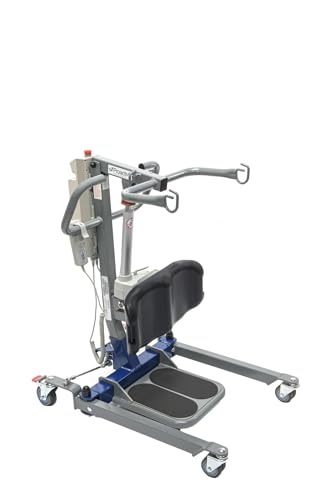
The sling is the part that makes or breaks the experience. A standing assist lift is only as safe and comfortable as the sling that connects the person to it. The wrong sling can slip, pinch, or pull at an awkward angle, while the right one supports the lower back and torso and keeps the person steady through the whole movement. That is why this guide focuses on lifts sold with a sling or listed as compatible with specific slings, rather than on bare frames that leave the sling question unanswered.
The three lifts below were chosen because their Amazon listings name the slings they work with. One is a hydraulic model with a long list of named compatible slings. One is an electric compact lift with a six-point spreader bar that accepts a wide range of stand-assist slings. One arrives with a transport sling in the box and is built around a six-point lift arm. Together they cover hydraulic and electric power, capacities from 350 to 500 pounds, and home as well as facility use.
Before choosing, keep one point in mind: a standing assist lift is not a full-body patient lift. It is designed for people who can take part in the transfer. If the person cannot bear weight on their legs at all, cannot sit upright, or cannot follow directions, a different type of lift is usually the safer choice, and a clinician or therapist should be part of the decision.
How to Choose a Standing Assist Patient Lift With a Compatible Sling
Choosing a standing assist lift means matching three things at once: the person, the sling, and the space where transfers happen. Work through each point before ordering.
Weight capacity comes first. Every lift has a stated maximum, and the person’s weight must sit comfortably below it, with room to spare for clothing. The lifts in this guide are rated at 350, 380, and 500 pounds. A higher rating tends to mean a sturdier frame, but it can also mean a heavier and wider unit, so balance capacity against the space you have.
Check the sling attachment system. Lifts connect to slings through loops or clips on a spreader bar, and the number of attachment points matters. A six-point spreader bar accepts more sling styles and spreads the load across more points. Always confirm that the sling you plan to use is listed as compatible with the exact lift model, not merely with the same brand, since a sling made for one lift in a brand’s range may not fit another.
Sling size and style matter as much as the lift. Stand-assist slings come in sizes from small to extra large, and the right size depends on the person’s torso and waist measurements, not on their clothing size. A sling that is too large lets the person slide down during the rise, while one that is too small digs in and causes discomfort. Measure the person, read the sling maker’s sizing chart, and keep the chart with the lift so a replacement sling can be ordered in the right size later.
Hydraulic or electric power. Hydraulic lifts are pumped by hand, so they need no battery and no charging. They do ask more of the caregiver’s arm strength, and the rise is slower. Electric lifts use an actuator and a rechargeable battery, so the caregiver presses a control and the lift does the work. That is a real advantage when transfers happen many times a day, but the battery must be kept charged.
Base width and leg opening. The lift’s legs must fit around the chair, bed, or toilet where the transfer begins and ends. Many lifts have legs that open with a foot pedal, which helps when the chair has wide armrests or the bed sits low. Measure the widest piece of furniture the lift must straddle and compare it with the lift’s open base width. Also check doorway widths along the path.
Knee pad, footplate, and casters. The knee pad braces the person’s lower legs during the rise, and the footplate keeps their feet in place. Look for a knee pad that adjusts in height and depth and a footplate with a non-slip surface. At least the rear casters should lock so the unit stays put during the transfer, and the locks should be easy to reach and operate with a foot.
Who will operate it. Be honest about the caregiver’s strength and the number of people available for each transfer. If only one caregiver is available, an electric model with simple controls and a clear sling attachment layout is usually the kinder choice. Also measure where the lift will be parked between uses, since a sit-to-stand lift is a large piece of equipment.
Top Picks
1. Invacare Get-U-Up Hydraulic Stand-Up Patient Lift GHS350
The Invacare Get-U-Up GHS350 is a hydraulic stand-up lift with a 350 pound weight capacity, built for people who can bear partial weight and need support moving from bed to commode or chair to standing. It is the longest-established model in this guide, and its strongest point is the sling documentation: the listing names the exact slings it works with, which removes the guesswork that causes so many sling mismatches.
The compatible stand-assist slings named in the listing are the Invacare Premier and Reliant stand assist slings, including the R130 one-size sling, the R131 extra-large sling, and the Premier small, medium, large, and extra-large slings, model numbers 2484685 through 2484688. The listing also names compatible transfer slings, including the R134 one-size and R136 extra-large slings and the Premier transfer slings 2484689 through 2484691 and 2485117. That level of detail is useful because it lets a caregiver order a replacement sling with confidence, knowing the model number has been matched to this lift by the maker.
As a hydraulic lift, the GHS350 needs no battery and no charging. The caregiver pumps a handle to raise the person, which keeps the design simple and means the lift is always ready to use. The trade-off is physical effort: each transfer asks for arm work from the caregiver, so this model suits households where transfers are less frequent or where the caregiver is comfortable with a manual pump. The hydraulic design also keeps the unit lighter than many electric lifts, which helps when it must be moved between rooms.
Invacare describes the GHS350 as easy to maneuver, with safety, comfort, and stability for both the person being lifted and the caregiver. It is aimed at everyday handling of people who need rehabilitation support or can bear partial weight. The listing notes that the lift is FSA and HSA eligible, which is a practical detail for buyers paying through a flexible spending or health savings account.
2. MDMaxx STS 500 Compact Sit-to-Stand Lift
The MDMaxx STS 500 Compact is an electric sit-to-stand lift with a 500 pound weight capacity, the highest in this guide. It is built for home and medical facility use, and it suits households where transfers happen often and the caregiver wants the lift to do the heavy work. A powered actuator raises the person from seated to standing with little physical strain on the caregiver, and a rechargeable battery powers the actuator between charges.
Sling compatibility is handled through a six-point spreader bar, which supports a wide range of stand-assist slings. A six-point bar gives the caregiver more attachment choices than a two-point or four-point bar, and it spreads the load across more points, which helps the sling sit evenly during the rise. The listing states sling and space compatibility as a named feature, so a caregiver shopping for a sling can look for stand-assist slings made for six-point bars and expect a fit, while still confirming the exact sling model against the lift before ordering.
The compact frame is designed for tight spaces. A foot pedal opens the base so the lift can be positioned around chairs, beds, and toilets, which covers the three places where most sit-to-stand transfers begin and end. Rear dual locking casters hold the lift steady while the person rises and while the caregiver attaches or removes the sling. Locking casters matter more than they seem: a lift that drifts during a transfer makes the whole process feel unsafe, even when the frame itself is solid.
The listing describes the STS 500 as a powered sit-to-stand patient lift aid designed for safe, efficient daily transfers. The electric actuator and rechargeable battery are the core of that design, and they make the lift a good match for a caregiver who will perform several transfers a day and wants to protect their own back and shoulders.
3. Tuffcare Rhino Lift Stand Up Electric Patient Lift With Transport Sling

The Tuffcare Rhino Lift is an electric stand-up patient lift with a 380 pound weight capacity, and it stands out in this guide because a transport sling is included in the box. The model listed here comes with a manual low base and a transport sling in large size, so the buyer does not need to shop for a first sling separately. For a household setting up its first lift, that removes one decision and one delay.
Beyond the included sling, the Rhino Lift is built around universal sling compatibility. Its six-point lift arm supports multiple sling types and sizes, so when the included large sling needs replacing, or when a different sling style suits the person better, the caregiver can choose from a broad range of stand-assist slings made for six-point arms. The listing names universal sling compatibility as a headline feature, which is the detail to check when comparing this lift with models that only accept one maker’s slings.
The electric actuator does the lifting, and the manual low base keeps the unit’s profile low for positioning under beds and around low chairs. The lift is described as a professional-grade sit-to-stand solution for safely transferring patients, and its 380 pound capacity sits between the hydraulic Invacare and the heavier-duty MDMaxx, covering a wide range of users.
Comparison Table
| Product | Key Feature | Best For |
|---|---|---|
| Invacare Get-U-Up GHS350 | Hydraulic lift, 350 lb capacity, named Invacare Premier and Reliant sling compatibility | Caregivers who want a proven manual lift with exact sling model numbers |
| MDMaxx STS 500 Compact | Electric actuator, 500 lb capacity, six-point spreader bar, rechargeable battery | Frequent transfers and heavier users in home or facility settings |
| Tuffcare Rhino Lift | Electric lift, 380 lb capacity, transport sling included, universal six-point sling compatibility | First-time buyers who want a powered lift that arrives ready to use |
Buying Guide
Begin with the person’s abilities. A standing assist lift is the right tool when the person can bear some weight on their legs, can sit upright with support, can hold a handle, and can follow simple directions. It is not the right tool when the person cannot bear weight at all or cannot sit upright. A physical therapist or clinician can assess the person and confirm that a sit-to-stand lift is appropriate, and that assessment is worth getting before spending on equipment.
Measure the person and the room. Take the person’s weight, torso measurements, and leg length, and measure the chairs, bed, and toilet the lift must work around. Compare the person’s weight with the lift’s capacity, leaving a margin. Compare the furniture width with the lift’s open base width. Measure doorways along the transfer path. Write the numbers down and keep them with the lift’s manual, because they will be needed again when a replacement sling is ordered.
Choose the sling with the same care as the lift. A sling is not a generic accessory. It must match the lift’s attachment system, fit the person’s measurements, and suit the transfer being performed. Stand-assist slings support the torso and lower back during the rise. Some are padded for comfort, and padding matters when transfers happen several times a day. Keep the sling’s model number and size on file, and inspect the sling before each use for worn stitching, frayed straps, or damaged loops. A damaged sling should be taken out of service at once.
Think about the caregiver. The caregiver operates the lift, attaches the sling, locks the casters, and guides the person. An electric lift with a simple hand control reduces strain. A hydraulic lift asks for more arm work but has no battery to charge. If one caregiver works alone, favor the simplest and most powered option that fits the space.
Plan for daily use. Transfers happen at the bed, the toilet, the shower chair, and the dining chair. Walk the path the lift will take and look for thresholds, rugs, and tight corners. Remove loose rugs from the transfer area, since a caster can catch on a rug edge at the worst moment. Keep an electric lift charged between uses, and keep the charging cable where it will not be tripped over.
Keep up with maintenance. Wipe the frame and knee pad after use, check the casters for hair and debris, and test the locks each week. For electric lifts, follow the maker’s battery guidance. For hydraulic lifts, check the pump and the release valve for smooth operation. Keep the manual in a known place so any caregiver who uses the lift can check the sling attachment steps.
Know when to ask for help. If the person gains or loses a noticeable amount of weight, if their strength changes, or if transfers begin to feel unsafe, stop and get a fresh assessment from a clinician or therapist. A lift that was right six months ago may need a different sling size or a different model as the person’s needs change.
Frequently Asked Questions
What is the difference between a standing assist lift and a full-body patient lift?
A standing assist lift helps a person who can bear partial weight rise from sitting to standing, using a knee pad, a footplate, and a stand-assist sling. A full-body lift carries the person’s entire weight in a sling through the air and is used when the person cannot bear weight on their legs.
Do standing assist lifts come with a sling?
Some do and some do not. The Tuffcare Rhino Lift in this guide arrives with a transport sling in large size, while other lifts are sold without a sling and expect the buyer to order a compatible one separately. Always check the listing to see whether a sling is included, and if it is not, confirm the exact sling models the lift accepts before ordering.
How do I know which sling size to buy?
Sling size depends on the person’s torso and waist measurements, not on clothing size. Use the sling maker’s sizing chart and measure the person as directed. A sling that is too large lets the person slip down during the rise, and one that is too small causes discomfort. When in doubt between two sizes, ask the sling maker or a therapist for guidance.
Can one caregiver operate a standing assist lift alone?
Many standing assist lifts are designed for one caregiver, and electric models with a hand control are usually the easiest for a single operator. Even so, a second person adds safety during the first few transfers while everyone learns the steps. Always follow the lift maker’s guidance on the number of caregivers needed for a given user.
Conclusion
The best standing assist patient lift with compatible slings is the one that matches the person, the sling, and the space where transfers happen. The Invacare Get-U-Up GHS350 gives a proven hydraulic option with clearly named sling compatibility and no battery to manage. The MDMaxx STS 500 Compact gives the highest capacity and powered lifting for frequent transfers. The Tuffcare Rhino Lift gives a powered option that arrives with a sling in the box and a six-point arm that keeps future sling choices open.
Whichever model you choose, confirm the sling fit before the first real transfer, measure the person and the furniture, and get a clinician’s view when the person’s abilities are unclear.
Disclosure: As an Amazon Associate, we earn from qualifying purchases.
More from Amazon
Programs that pair well with the guide above. Offers and eligibility are set by Amazon and may change.
Free shipping on eligible items, Prime Video and more. Eligible new members can start with a free trial.
Start a Prime free trialAudiobooks and podcasts to listen to on the go. Eligible new members can start with a free trial.
Try Audible freeAd-free music streaming. Eligible new subscribers can start with a free trial.
Try Music Unlimited freeA free business account with business pricing and bulk-buying tools for work, shop or home office.
Create a business accountAs an Amazon Associate we earn from qualifying purchases.



Write Your Review
No reviews yet. Be the first to share your experience!