

Key takeaways
- Three manual hydraulic patient lifts for caregiver assisted transfers, compared on capacity, cradle style, base width and caster size, with the exact listing variant to buy for each.
A hydraulic patient lift moves a person who cannot bear weight between a bed, a wheelchair, a commode or a chair using a sling suspended from a crane-style boom. The caregiver works a hand pump to raise the lift and eases a release valve to lower it, so the machine needs no battery, no charging and no outlet. That simplicity is exactly why hydraulic lifts remain the default choice for home care: there is nothing to run flat before a morning transfer, the mechanism is easy to inspect, and the lifting motion stays slow and controllable in a caregiver’s hands.
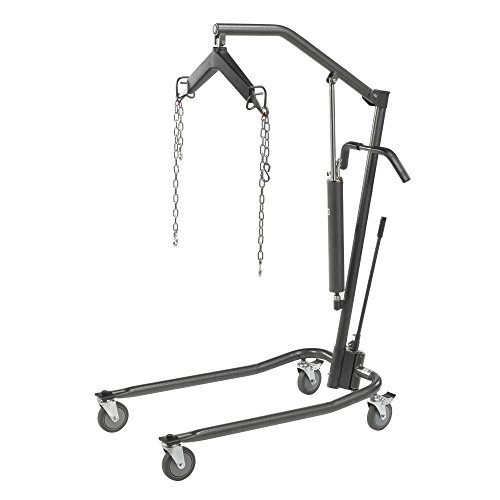

Every lift in this roundup is a manual hydraulic model. That point matters because many lifts that look nearly identical in photos are battery-electric, and they are a different purchase with different upkeep. The three lifts below — from Drive Medical, Invacare and Vive — cover the realistic home-care range: two full-capacity 450 lb models with 6-point cradles, and one lighter 400 lb model with an adjustable-width base for tighter rooms.
One buying note before the picks: on most listings the sling is a separate purchase, and the lift is only half of a working transfer system. Budget your attention accordingly — the cradle style on the lift decides which slings fit, and the sling decides how the person is supported. Each pick below states its capacity exactly as the maker lists it, and the Watch out notes flag the variant traps that surround these models, because all three brands sell near-identical versions under different listings.
Quick Picks
- Top pick: Drive Medical 13023SV Hydraulic Patient Lift — 450 lb capacity, 6-point cradle, the widest sling and parts ecosystem of the three.
- Runner-up: Invacare 9805P Hydraulic Patient Lift — 450 lb capacity with a padded swivel bar and full 360-degree patient rotation.
- For tighter rooms: Vive Hydraulic Patient Lift — 400 lb capacity, adjustable base width, the lightest-duty and most maneuverable pick here.
As an Amazon Associate we earn from qualifying purchases.
| Lift | Capacity | Cradle | Base notes |
|---|---|---|---|
| Drive Medical 13023SV | 450 lb | 6-point cradle/swivel bar | 5-inch casters on the pinned listing |
| Invacare 9805P | 450 lb | 6-point padded swivel bar | Bent mast, 360-degree rotation |
| Vive Hydraulic Patient Lift | 400 lb | Sling cradle (see listing) | Base width adjusts 24.4–31.5 in |
How to Choose
Start with capacity, and leave a margin
Capacity is the first filter and it is not negotiable: the person’s full weight, in the sling, must sit comfortably under the lift’s rated capacity. The two full-size lifts here are rated at 450 lb; the Vive is rated at 400 lb. If the person being transferred is anywhere near a lift’s ceiling, choose the higher-rated model — a lift working at its limit pumps harder, lowers less smoothly, and leaves no room for weight changes over time. Capacity figures in this article are stated exactly as each maker lists them, because resale listings and second-hand descriptions sometimes quote lower numbers for the same model; the maker’s figure is the one to trust.
Match the cradle to the sling
All three lifts carry the person in a fabric sling hung from a cradle or swivel bar. A 6-point cradle, like the ones on the Drive Medical and Invacare lifts, spreads attachment points wider and suits full-body and divided-leg slings, which is what most bed-to-wheelchair transfers use. Before ordering, confirm the sling you plan to buy is listed as compatible with the cradle style on your lift, and remember that the sling itself is normally bought separately. A lift that arrives without a sling cannot be used until the right sling does.
Measure doorways, bed clearance and turning space
A patient lift has to roll through the home it works in. Check three measurements: the width of the narrowest doorway on the transfer route, the clearance under the bed (the lift’s legs must slide underneath so the boom can position over the person), and the floor space beside the bed for turning. Caster size matters here — larger casters, like the 5-inch set on the pinned Drive Medical listing, roll more easily over thresholds and carpet edges, while the Vive’s adjustable base width (24.4 to 31.5 inches) is designed to narrow for doorways and widen for stability around a chair or commode.
Think about the pumping, not just the lifting
The caregiver is the motor on a hydraulic lift. A smooth pump handle with a reachable release valve makes transfers calmer for the person in the sling, and a swivel bar that lets the caregiver rotate the person — the Invacare allows a full 360-degree rotation — reduces the dragging and re-positioning that makes transfers tiring. If one caregiver will operate the lift alone, prioritize the model whose pumping and lowering they can manage at the person’s actual weight, not at an empty test lift in a showroom.
The 3 Best Options
1. Drive Medical 13023SV Hydraulic Patient Lift — Top Pick
The Drive Medical 13023SV is the standard home-care hydraulic lift: a steel-frame, manual-pump lift in Drive’s Silver Vein finish, rated at 450 lb, with a 6-point cradle that accepts the broad range of Drive and third-party slings. It is the pick for most households because the model has been sold for years, replacement parts and compatible slings are easy to source, and its capacity covers the widest range of users.
Specs
- Type: manual hydraulic (hand pump) patient lift
- Weight capacity: 450 lb
- Cradle: 6-point cradle/swivel bar
- Frame: steel, Silver Vein finish
- Casters: 5-inch on this listing variant
Best for: Caregivers who want the mainstream, highest-capacity option with the deepest sling and parts support.
Watch out for: Drive sells near-identical variants of this lift — chrome finish, 3-inch instead of 5-inch casters, closely related model numbers. The link above pins the Silver Vein, 5-inch-caster version (model 13023SV); confirm the variant on the product page before ordering, and note that the sling is a separate purchase on most listings.
2. Invacare 9805P Hydraulic Patient Lift — Runner-Up
The Invacare 9805P is the other long-running 450 lb design in home care. Its bent mast gives the boom a shape that positions the person clear of the lift’s base, the 6-point swivel bar is padded where sling straps attach, and the person can be rotated a full 360 degrees during the transfer — useful when a wheelchair or commode cannot be placed in the ideal spot and the person has to be turned to meet it.
Specs
- Type: manual hydraulic (hand pump) patient lift
- Weight capacity: 450 lb
- Swivel bar: 6-point, padded
- Mast: bent mast design
- Rotation: 360-degree patient rotation
- Finish: painted, beige (this listing)
Best for: Caregivers who value the padded swivel bar and in-air rotation for awkward room layouts.
Watch out for: The link above is the lift alone. The same 9805P is also sold as a kit bundled with a full-body mesh sling under a different listing, and an older chrome version circulates as well — if you want the sling included, switch listings deliberately rather than assuming this one has it. Use the maker’s 450 lb capacity figure for this model; occasional resale descriptions quote a lower figure that does not match Invacare’s specification.
3. Vive Hydraulic Patient Lift — For Tighter Rooms
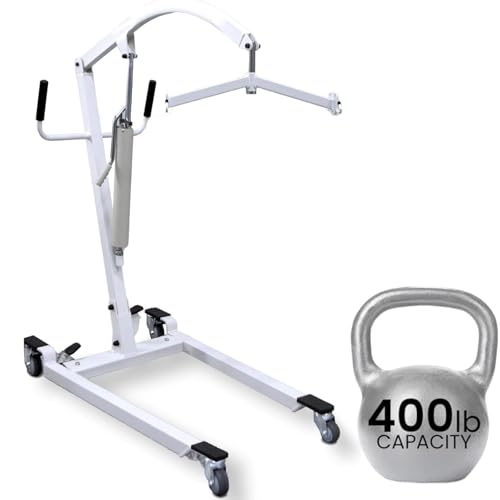
The Vive Hydraulic Patient Lift (model MOB1068WHT) is the lighter-duty entry here: a manual hydraulic pump lift rated at 400 lb, with a lift height range of 30.7 to 74 inches and a base that adjusts from 24.4 to 31.5 inches wide. That adjustable base is its reason to exist — narrow it to pass a doorway, widen it to straddle a chair — and the height range covers low beds through to commode and chair transfers.
Specs
- Type: manual hydraulic (hand pump) patient lift
- Weight capacity: 400 lb
- Lift height range: 30.7–74 in
- Base width: adjustable, 24.4–31.5 in
Best for: Smaller homes and lighter users, where doorway width and turning space rule out a full-size lift.
Watch out for: The 400 lb capacity is the lowest of the three, so check the person’s weight with an honest margin before choosing it. As with the other picks, confirm what the listing includes — plan on choosing a compatible sling if one is not stated in the box contents.
Which One Fits Your Situation
Transfers for a person near or above 400 lb: Choose between the two 450 lb lifts. The Drive Medical is the default for its sling ecosystem; the Invacare is the alternative when its padded bar and rotation suit your room layout. The Vive is out of this conversation — its 400 lb ceiling leaves no margin.
One caregiver working alone: The Invacare’s 360-degree rotation earns its place here, because a solo caregiver cannot easily drag a wheelchair into a better position mid-transfer. Rotating the person in the air to meet the chair is the safer sequence.
Narrow doorways and small bedrooms: The Vive’s adjustable base is built for this. Measure your narrowest doorway against its 24.4-inch minimum base width before ordering — if the full-size lifts cannot pass your doors, they cannot be used for the transfers that matter.
A lift that must work during power cuts and without upkeep routines: All three qualify, and this is the core case for hydraulic over electric. There is no battery to charge, age out or fail; a hydraulic lift works the same on the first transfer of the day and during an outage.
Common Mistakes
- Buying an electric lift by accident. Listings for hydraulic and battery lifts sit side by side and the frames look alike. Every pick in this article is manual hydraulic; if a listing mentions a battery, a charger or an actuator, it is a different type of lift.
- Ordering the wrong variant of the right lift. Finish, caster size and included accessories vary between listings of the same model. The Drive Medical link here pins the Silver Vein 5-inch-caster variant, and the Invacare link pins the lift alone, not the sling kit — check the variant on the page you actually order from.
- Assuming a sling is in the box. On most listings it is not. A lift without a compatible sling is unusable, so choose the sling at the same time, matched to the cradle style and the person’s size.
- Trusting a capacity figure from a resale description. Second-hand listings sometimes quote lower capacities for these models. Work from the maker’s capacity figures — 450 lb for the Drive Medical and Invacare lifts, 400 lb for the Vive — and keep a margin under them.
- Skipping the doorway and under-bed measurements. A lift that cannot slide its legs under the bed or pass the bedroom door will be returned or, worse, left unused. Measure first; the Vive’s base range and the Drive Medical’s caster size are in the specs above for exactly this check.
FAQ
Are these lifts really powered only by a hand pump?
Yes. All three are manual hydraulic lifts: pumping the handle raises the boom through a hydraulic cylinder, and a release valve lowers it gradually. None of them has a battery or motor, and none should be described as electric — that is a deliberate choice for this keyword, since caregiver-assisted home transfers are where hydraulic lifts are most common.
Which sling should I buy with the lift?
Match the sling to the cradle and to the transfer. The Drive Medical and Invacare lifts use 6-point cradles, which suit full-body and divided-leg slings for bed-to-wheelchair work; a commode transfer calls for a sling with a commode opening. Buy the sling size for the person’s weight and measurements, and confirm compatibility with the lift’s cradle before ordering — the sling is normally a separate purchase.
Can one caregiver operate these lifts alone?
That is the use case they are designed around, provided the person’s weight is well within the lift’s rated capacity and the route is clear. The practical limits are pumping effort at higher weights and maneuvering space; the Invacare’s in-air rotation and the Vive’s narrowing base each remove one of the awkward steps a solo caregiver faces.
How do I choose between the two 450 lb lifts?
On details rather than capacity, since both are rated the same. The Drive Medical 13023SV has the broader sling and parts ecosystem and the 5-inch casters on the pinned listing; the Invacare 9805P answers with a padded swivel bar, a bent mast and full rotation. Either is a sound full-capacity choice — pick by your room layout and which sling range you prefer.
What maintenance does a hydraulic lift need?
Keep the casters clear of hair and grit, check that the pump raises smoothly and the release valve lowers without dropping, and inspect sling stitching and straps before each use. If a hydraulic cylinder begins to sink under load or leak fluid, stop using the lift and have it serviced — do not work around a weakening cylinder with a person in the sling.
More from Amazon
Programs that pair well with the guide above. Offers and eligibility are set by Amazon and may change.
Free shipping on eligible items, Prime Video and more. Eligible new members can start with a free trial.
Start a Prime free trialAudiobooks and podcasts to listen to on the go. Eligible new members can start with a free trial.
Try Audible freeAd-free music streaming. Eligible new subscribers can start with a free trial.
Try Music Unlimited freeA free business account with business pricing and bulk-buying tools for work, shop or home office.
Create a business accountAs an Amazon Associate we earn from qualifying purchases.

Write Your Review
No reviews yet. Be the first to share your experience!